In Australia, the humble garage has evolved far beyond a place to park the family car or stack old plastic moving boxes. Today, homeowners frequently convert these spaces into home gyms, workshops, retreats for creative hobbies or even dedicated home offices. However, without proper thermal protection, an Australian garage quickly turns into a roasting oven during the scorching summer months and an icebox in winter. Installing high-quality garage insulation is the single most effective way to regulate interior temperatures, cut energy costs and create a usable year-round space.
1. Choose the Right Insulation Material for the Local Climate
Not all insulating materials are created equal, and what works well in cold northern European climates might not be suitable for the intense radiant heat of an Australian summer. Professional installers emphasise selecting materials specifically engineered to combat local climate conditions.
For walls and ceilings, glasswool or polyester batts are popular choices because they trap air inside tiny pockets, slowing down conductive heat transfer. However, when dealing with metal roofs or sectioned doors exposed to direct sunlight, reflective foil insulation (often referred to as sarking) is essential. Reflective foil works by reflecting up to 97% of radiant heat away from the building before it can penetrate the interior.
2. Prioritise the Garage Door
You can pack your walls and ceiling with the highest-rated batts available, but if your garage door remains uninsulated, heat will still flood into the room. As the largest uninsulated surface in the entire house, a thin metal or timber panel door acts like a massive thermal radiator.
Professionals recommend installing specialised retrofitting kits designed specifically for sectional or tilt-up doors. Expanded polystyrene (EPS) or foil-faced rigid foam panels can be easily fitted into the interior panel frames. These lightweight panels add minimal weight — ensuring you do not strain the automatic door opener mechanism — while dramatically improving thermal performance. If you are ordering a brand-new door, consider investing in a factory-insulated model right from the start.
3. Seal Air Leaks & Drafts Before Insulating
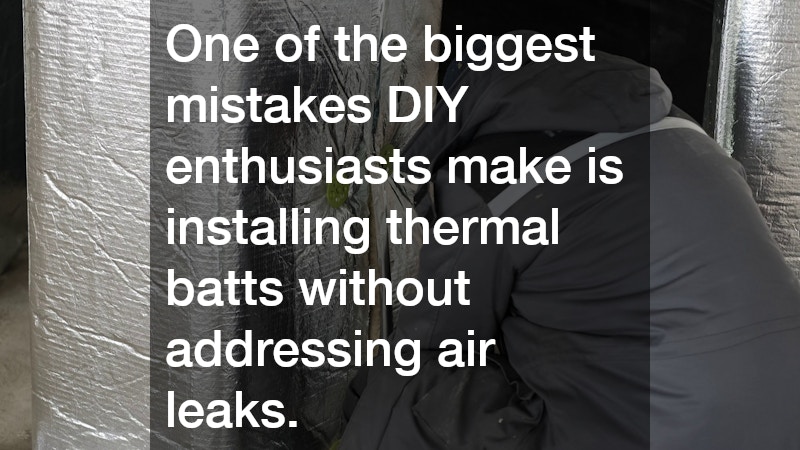
One of the biggest mistakes DIY enthusiasts make is installing thermal batts without addressing air leaks. Thermal resistance relies on creating a sealed pocket of still air. If hot summer breezes or icy winter drafts can freely enter around structural gaps, your insulation will lose a vast amount of its thermal efficiency.
Before putting up a single batt, carefully inspect the space and address these key vulnerability zones:
- Windows & frames: Seal gaps around timber or aluminium window frames using high-grade exterior sealant or expanding foam.
- External brickwork & wall gaps: Fill larger cracks and gaps around utility penetrations or brick joins with expanding polyurethane foam.
- Personal access doors: Install weather-stripping along the sides and top frame, paired with a draft stopper at the base.
- Garage door base: Fit a heavy-duty rubber weather seal along the bottom edge of the main door to block drafts at ground level.
Taking the time to eliminate drafts keeps the interior temperature stable, reduces dust accumulation and prevents unwanted insects or pests from moving in.
4. Account for Moisture Control & Ventilation
Condensation is a hidden enemy in Australian garages, particularly in coastal regions or areas prone to high humidity. When warm air meets cold concrete floors or uninsulated metal sheeting, moisture droplets form. Over time, trapped moisture leads to dangerous mould growth, rots timber framework and damages stored belongings or tools.
To safeguard your home, trade experts stress the importance of moisture management. Always install a breathable vapour-permeable membrane on the external side of bulk insulation in wall cavities. This allows trapped moisture vapour to escape while blocking liquid water from penetrating inward. Additionally, ensure adequate passive ventilation, such as wall vents or a roof whirlybird, so air can circulate continuously without compromising thermal performance.
5. Focus on R-Values & Acoustic Dampening
Thermal resistance is measured in R-values: the higher the R-value rating, the better the material resists heat flow. For most Australian states, professionals recommend aiming at minimum R-values of R2.0 to R2.5 for garage walls and R3.5 or higher for the ceiling cavity.
Beyond thermal control, high-density insulation batts offer significant acoustic benefits. If you intend to use power tools, practice music, exercise or run a home business, acoustic insulation will absorb sound vibrations. This keeps interior noise contained so you do not disturb your family or neighbours, while simultaneously blocking out street traffic and lawnmowers from outside.
Transforming your garage into a comfortable, functional and energy-efficient zone does not happen by accident. By choosing climate-appropriate materials, sealing air gaps, protecting the main door, managing moisture and aiming for high R-values, you can achieve professional-grade results that stand up to harsh weather conditions. Investing in proper garage insulation ultimately enhances your lifestyle, protects your property and increases the overall value of your home for years to come.